
Lenawee County Warrant Search Basics
No official Lenawee County online warrant list was found on the county's own pages. That matters. Many websites promise an instant warrant lookup, but the county itself does not publish one. So a real Lenawee County warrant search means contacting the offices that hold the order, not typing a name into a database.
Two offices matter most. The court that issued the warrant knows its status. The Lenawee County Sheriff's Office handles service and can confirm many warrants by phone. The Sheriff's Office sits at 405 N. Winter Street in Adrian and takes calls at 517-263-0524.
The Sheriff's Office page lists the leadership, the records hours, and the main contact line. It is the right first stop for a warrant question.
The Lenawee County Sheriff's Office page gives the main number and front-lobby help details.
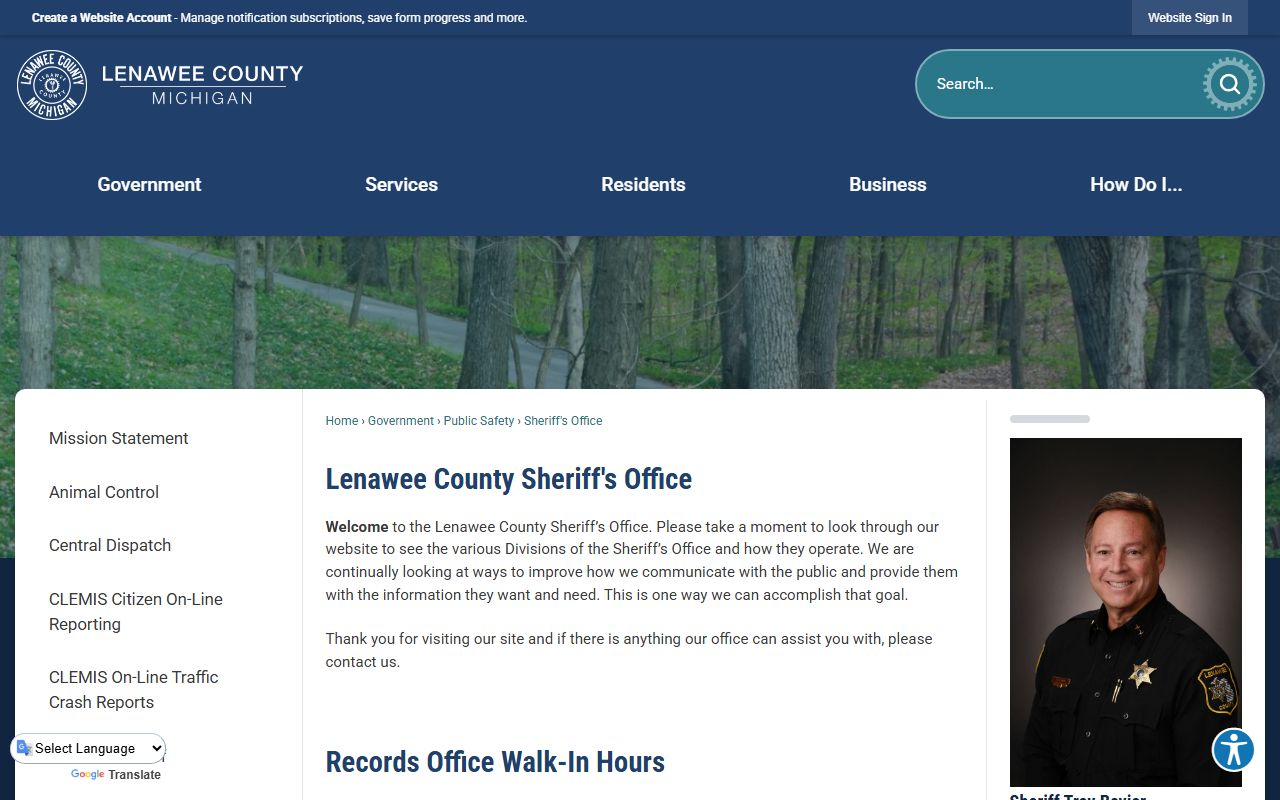
If the Records Office is closed, the public can use the phone in the front lobby, which connects to Dispatch.
Note: Third-party warrant sites are not official, so confirm any warrant directly with the issuing court or the Sheriff before acting on what a private site claims.
How to Check for a Lenawee County Warrant
The right office depends on the kind of case. Traffic, misdemeanor, and many bench warrants tie to the 2A District Court. Felony and probation matters tie to the 39th Circuit Court. When the case type is unknown, the Sheriff's Records Division is a good starting point.
The Sheriff's Records Division handles report and record requests. It can be reached during set weekday hours, and it also takes requests by mail and fax.
The Sheriff's Records Division page lists the request channels, hours, and fax number.
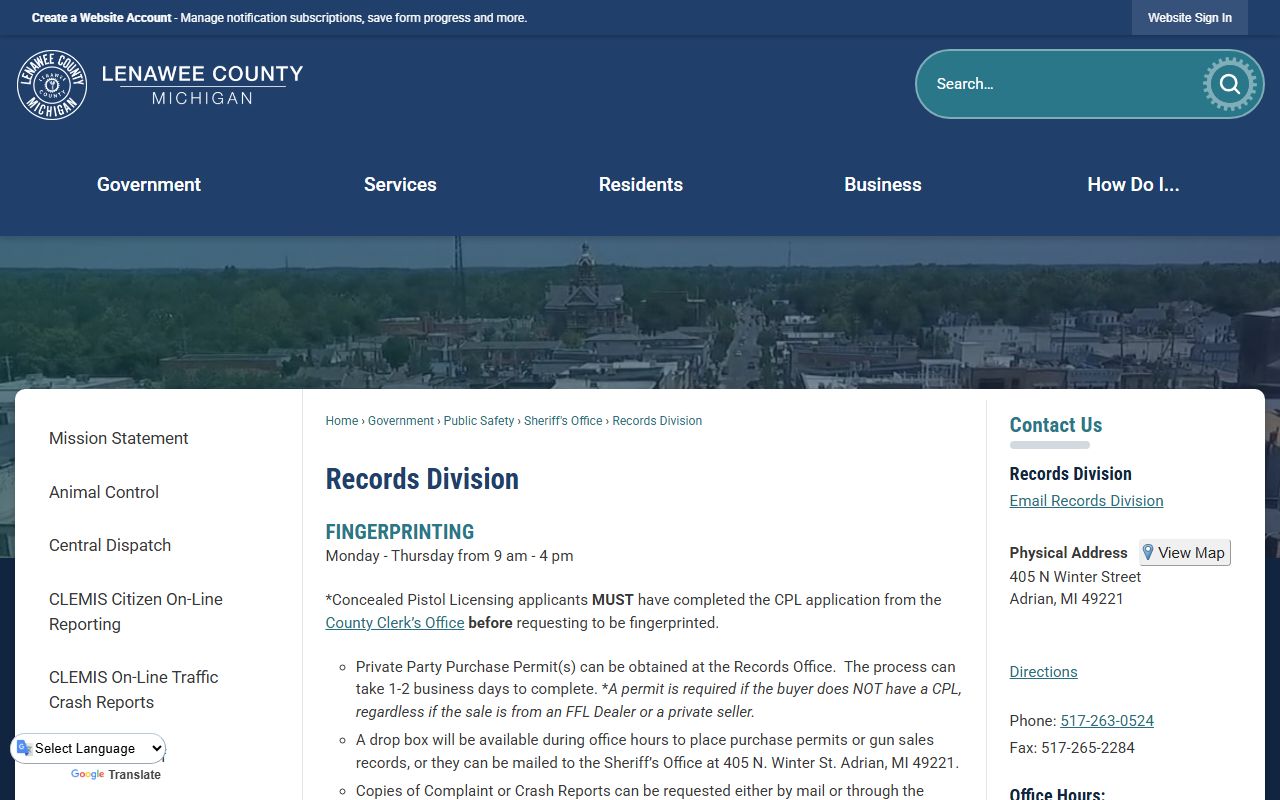
Use the contacts below to reach the right desk for a warrant question.
- Sheriff's Office and Records - 405 N. Winter St., Adrian; 517-263-0524, Records ext. 2052 or x2031, fax 517-265-2284.
- 2A District Court - bench, traffic, misdemeanor, and probation warrants; 517-264-4675.
- 39th Circuit Court - felony and Circuit probation warrants; 517-264-4597.
- Automated court-date line - for someone in custody, 517-265-4400.
What the Sheriff Records Division Handles
The Sheriff's Records Division does far more than warrants. It is staffed by four clerks and sits at the center of the office's public records work. Knowing its full range helps you frame a request the right way.
The division handles incident reports, firearm permits and registrations, fingerprints, background checks, sex offender registrations, accident reports, jail payments, traffic citations, and general requests. Once a report comes in, staff enter the case information into the county system for later use by Sheriff's personnel and for public retrieval through a records request when the law allows it.
Its public hours are set. The Records Office is open Monday through Thursday from 8 a.m. to 4:30 p.m. and Friday from 8 a.m. to noon. When the office is closed, the phone in the front lobby connects to Dispatch, so a caller is never left without a live option.
Note: A warrant question and a report request can start at the same Records Division desk, but active warrant or investigation details may still be withheld by law.
Types of Lenawee County Warrants
Not all warrants are alike. The type tells you which court issued it and why. It also hints at what it takes to clear it. Some are set for arrest. Others come from a missed court date or a broken condition.
- Arrest warrant - issued after a complaint and probable cause to bring a person to court.
- Bench warrant - issued by a judge for a missed date, a failure to pay, or contempt.
- Search warrant - authorizes a search of a place or item, and is often sealed while active.
- Probation violation warrant - arises from a District Court or Circuit Court probation term.
- Fugitive or extradition warrant - involves custody and transport across county or state lines.
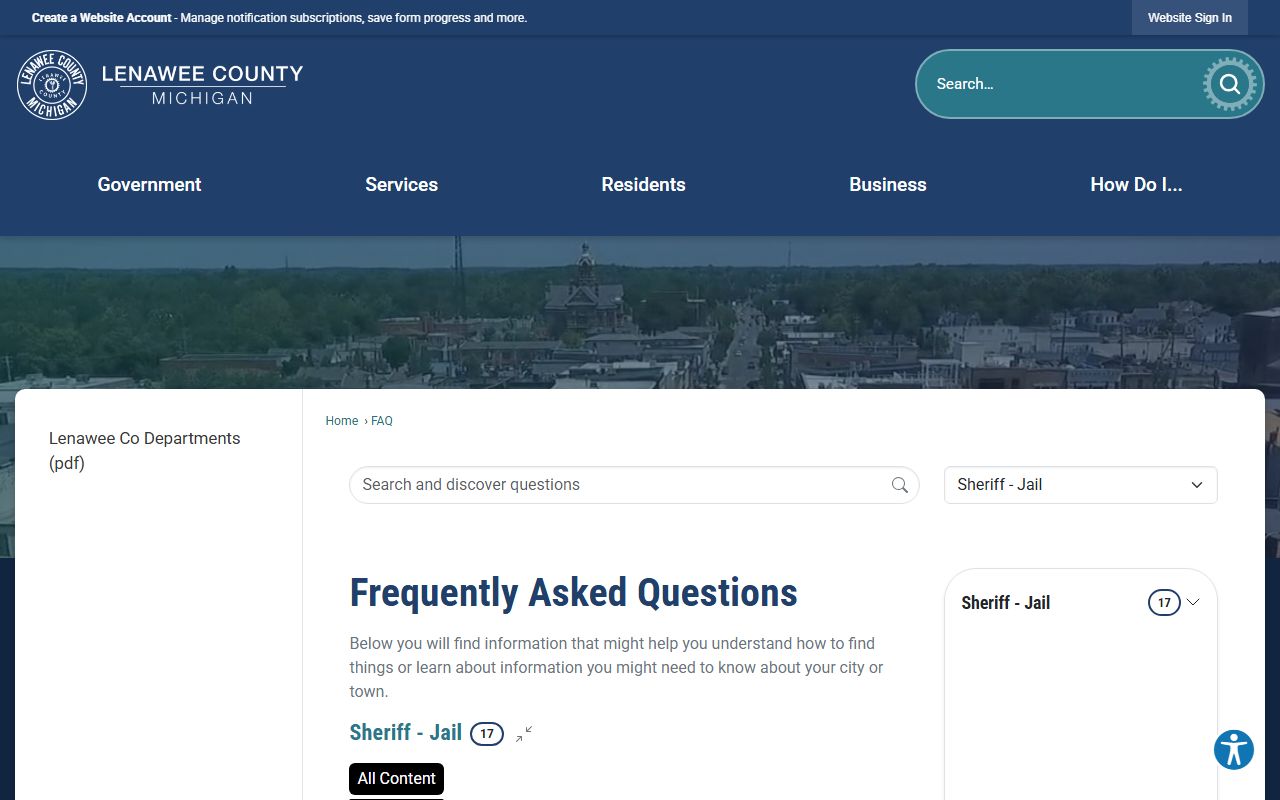
Bench warrants are the type most people meet, and they are common after a skipped hearing or an unpaid fine. The Sheriff Jail FAQ points callers to the courts for case detail and gives the automated court-date line for people already in custody.
The Sheriff Jail FAQ explains the automated court-date phone system and where to call for more case information.
For a warrant tied to an open charge, the Lenawee County court charge records page explains how charges and warrants connect.
What a Lenawee County Warrant Record Shows
A warrant record holds a fixed set of facts. Not all of it is public while the warrant is active. The court and Sheriff confirm the details that can be shared. The table below lists the fields a warrant record typically carries.
| Field | Public Availability | Notes |
|---|---|---|
| Name | May be confirmed by the court or Sheriff | Exact spelling and date of birth help avoid a mix-up. |
| Case number | Often in the court record | Search MiCOURT if the number is known. |
| Charge or offense | May appear on the criminal case | An allegation, not a conviction. |
| Issuing court | Needed to act | District Court versus Circuit Court matters. |
| Bond amount or type | May be set on the warrant or at arraignment | Confirm with the court or jail. |
| Court date | Through court display or the jail line | For someone in custody, call 517-265-4400. |
| Warrant status | Must be confirmed directly | Online dockets can lag and are not a full warrant check. |
Court dockets on MiCOURT may show bench-warrant hearing settings or failure-to-appear entries, but they are not a complete warrant list. Treat the docket as a hint, then confirm with the court.
How to Resolve an Outstanding Warrant
An open warrant does not go away on its own. The safest route is to face it through the issuing court, ideally with a lawyer. Acting quickly often gives more options for bond and scheduling.
- Do not rely on third-party sites. Start with the court that likely issued the warrant or the Sheriff's Office.
- Call the 2A District Court for traffic, misdemeanor, probation, or failure-to-appear matters, or the 39th Circuit Court for felony and Circuit matters.
- Ask whether the warrant is active, whether bond is set, and whether a walk-in hearing can be scheduled.
- If the person is already in jail, use the automated court-date line at 517-265-4400, then call the court for details.
- For serious charges, contact counsel or the Public Defender if you are eligible, rather than sending sensitive details to unofficial sites.
- After the case is handled, confirm the warrant recall with the issuing court, since clearance may not update across systems at once.
Ask the court two more questions while you have someone on the line. Find out whether a bond is set and what payment methods the court accepts, and ask how a walk-in arraignment or hearing gets scheduled. Confirm afterward that the warrant has been recalled, since a clearance may not update instantly across every system.
People with an open District Court case that has cost them a driver's license may also qualify for the county's Docket to Drive program, which helps resolve tickets and restore driving.
Sealed Warrants and FOIA Limits
Some warrant information is not public. Active search warrants are often sealed. Juvenile matters carry their own protections. Michigan's Freedom of Information Act lets the public request many sheriff and county records, but it also lets an agency hold back active investigatory material.
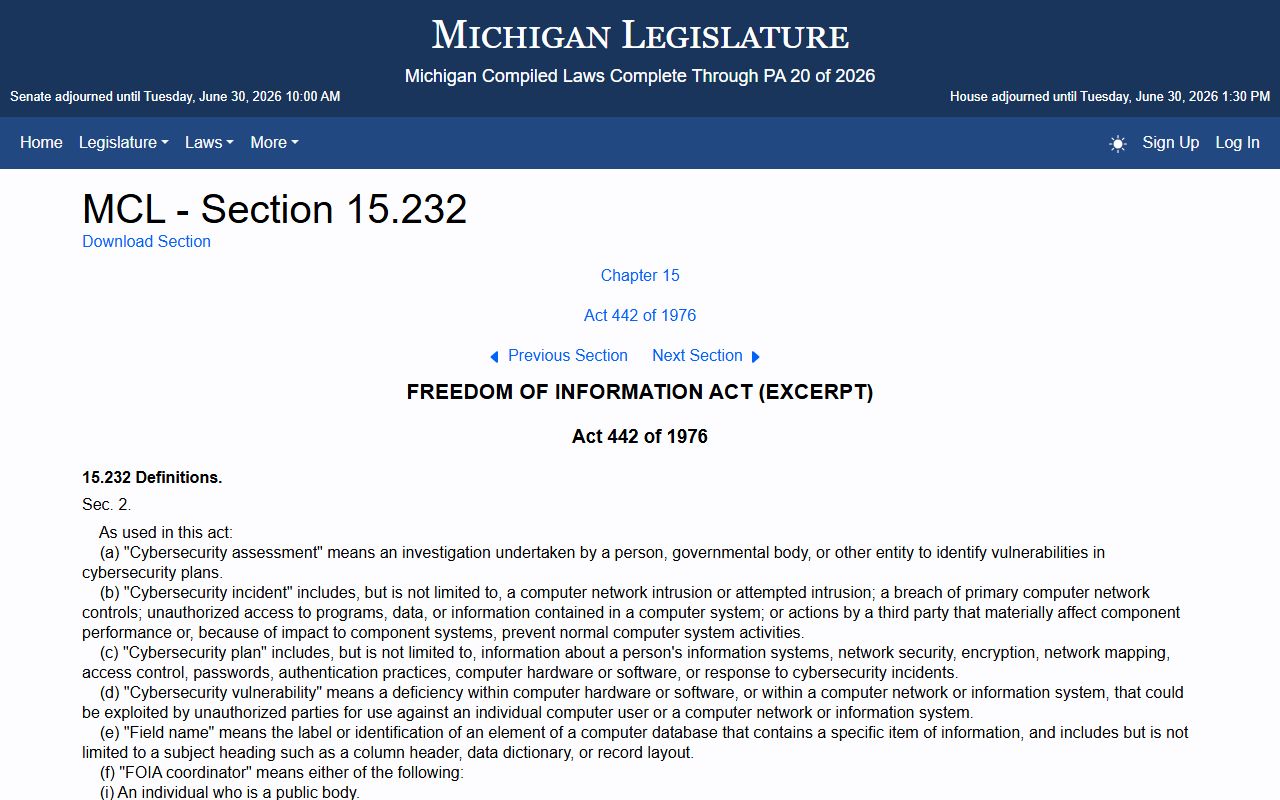
The FOIA definitions statute is where those limits live, and it also explains why court files follow court rules instead of ordinary FOIA.
Michigan's FOIA definitions statute sets out public-body and public-record limits, including the judiciary exclusion.
For court case records that surround a warrant, the Lenawee County criminal court records page covers how the case file is accessed.
Note: An active warrant or search warrant may be withheld from a public request while the case is open, so a records request will not always confirm one.
Related Public Safety Lookups
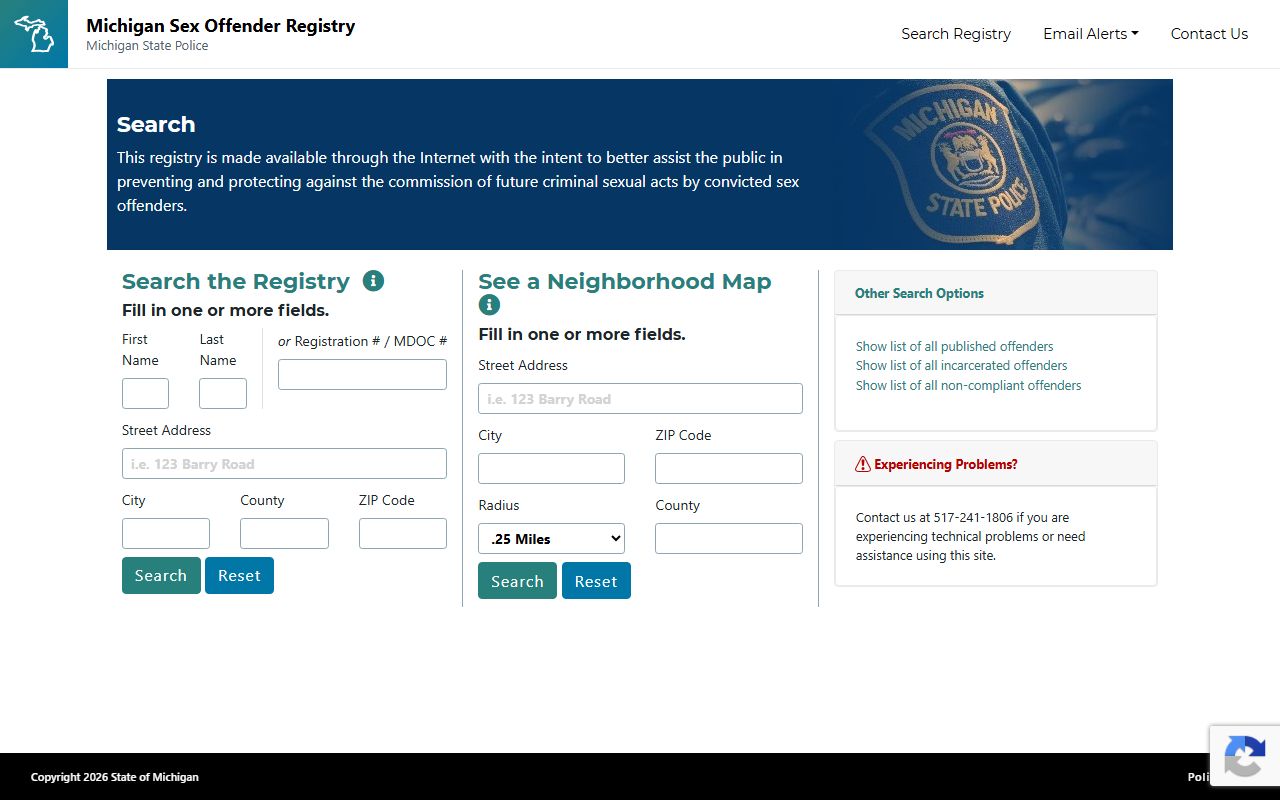
A warrant search often overlaps with other safety checks. Michigan runs a public Sex Offender Registry that anyone can search by name, address, or county. It is separate from any warrant, but people looking into a person or a neighborhood often use both.
The registry search form accepts a name pair or a registration number, plus city, county, or ZIP for a geographic search.
The Michigan Sex Offender Registry search lets you look up records by name or location.
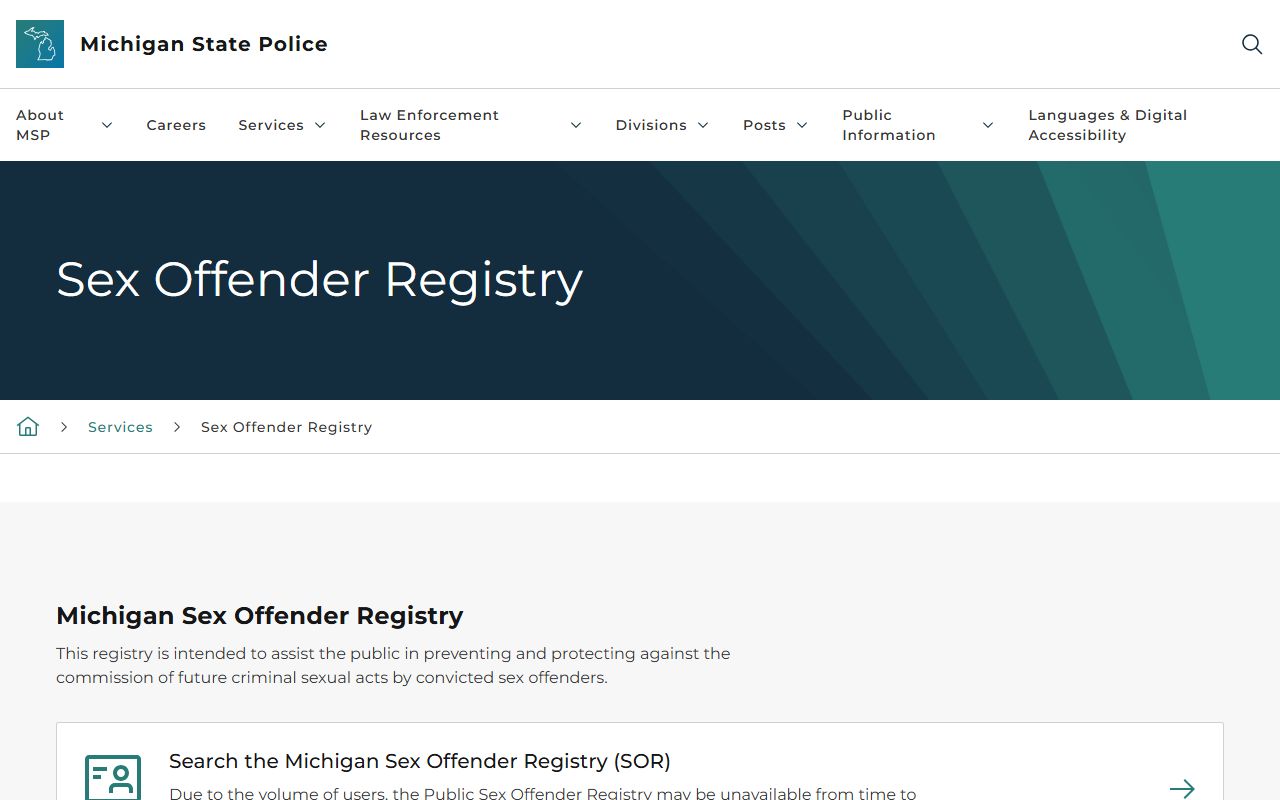
The Michigan State Police also publish the rules and field descriptions behind that registry.
The Michigan State Police registry page explains the search rules and what each field means.
For custody status tied to a person of interest, the Lenawee County inmate records page covers how to confirm someone is held.