
Lenawee County Arrest Records and Charges
An arrest record is the booking side of a case. It is created by the arresting agency, usually the Lenawee County Sheriff's Office or a city police department, when a person is taken into custody. It notes the person, the arrest date, and the alleged offense at the time of booking. That booking detail lives with the jail, not the court. For the custody and booking side, the Lenawee County inmate records page covers how to confirm someone is held and how to reach the jail.
A court charge record is the formal allegation the prosecutor files after arrest. It is the charge the court will actually hear. The arrest tells you why someone was picked up. The charge tells you what the state has decided to pursue. These two do not always match, because a prosecutor can file more, fewer, or different counts than the arrest listed.
Neither an arrest nor a filed charge is proof of guilt. Both are allegations. A charge becomes a conviction only after a plea or a verdict, and the full outcome is tracked in the Lenawee County criminal court records case file.
Note: An arrest record and a court charge record can list different offenses, so confirm the current charge with the court rather than trusting the booking offense alone.
What a Lenawee County Arrest Record Shows
Arrest and booking information is held by the agency that made the arrest. In Lenawee County, that is often the Sheriff's Office Records Division, which handles incident reports, arrest information, fingerprints, and background checks. The county's Freedom of Information Act process is the channel for many of these law enforcement records.
The Sheriff's Records Division does not run a public arrest blotter online, so a records request is often the honest route to booking detail. The county's official request page explains how to file for sheriff and jail records.
The county FOIA requests page lists the online portals for sheriff records and other departments.
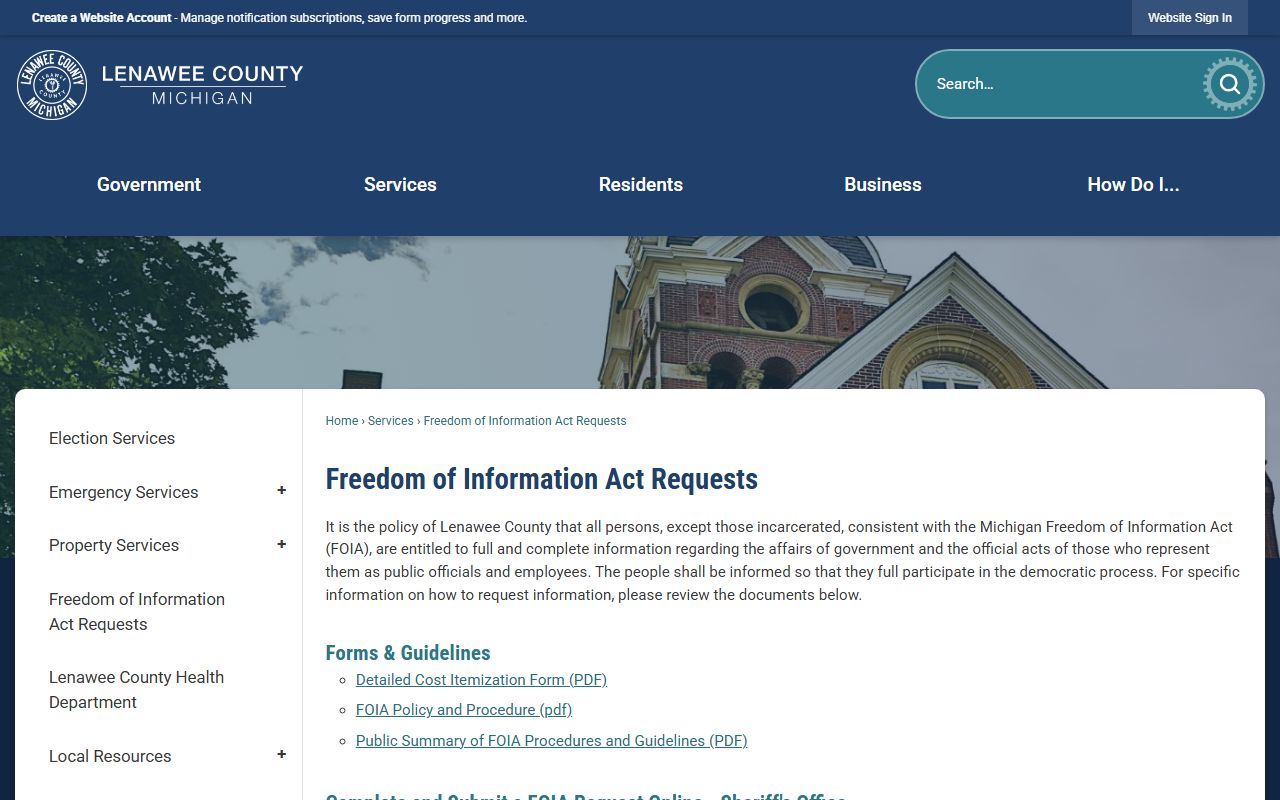
Because active investigations can be withheld, some arrest detail may not release until a case is charged or closed. Michigan's FOIA law sets the rules for what an agency must give out and what it may hold back.
- Arresting agency - the sheriff, a city police force, or a state agency.
- Arrest date and location - when and where the person was taken in.
- Booking offense - the alleged crime listed at intake, not the final charge.
- Incident or complaint number - the report tied to the arrest.
- Custody status - whether the person is still held, released, or bonded out.
From Arrest to Court Charges After Arrest
The charge is not final at the moment of arrest. A prosecutor reviews the police report and decides what to file. In Lenawee County, that decision belongs to the Prosecuting Attorney's Office. Only after that review does the case get a formal charge and a court date.
The first court event is usually an arraignment in the 2A District Court. The judge reads the charge, advises the person of their rights, and may set bond. Misdemeanors often stay in District Court. Felonies start there and can be bound over to the 39th Circuit Court after a preliminary examination.
The steps below trace the common path from arrest to a filed charge.
- Arrest or police complaint by the sheriff or a local police department.
- Report sent to the Prosecuting Attorney for a charging decision.
- Prosecutor authorizes a complaint and the charge is filed.
- District Court arraignment, advice of rights, and bond.
- Preliminary stages, then plea, dismissal, or felony bindover to Circuit Court.
Some cases move toward treatment instead of a standard sentence. Lenawee County runs specialty courts, including a Mental Health Court, that can shape how charges resolve for eligible people.
The county Mental Health Court page describes the pre-screen and eligibility for that track.
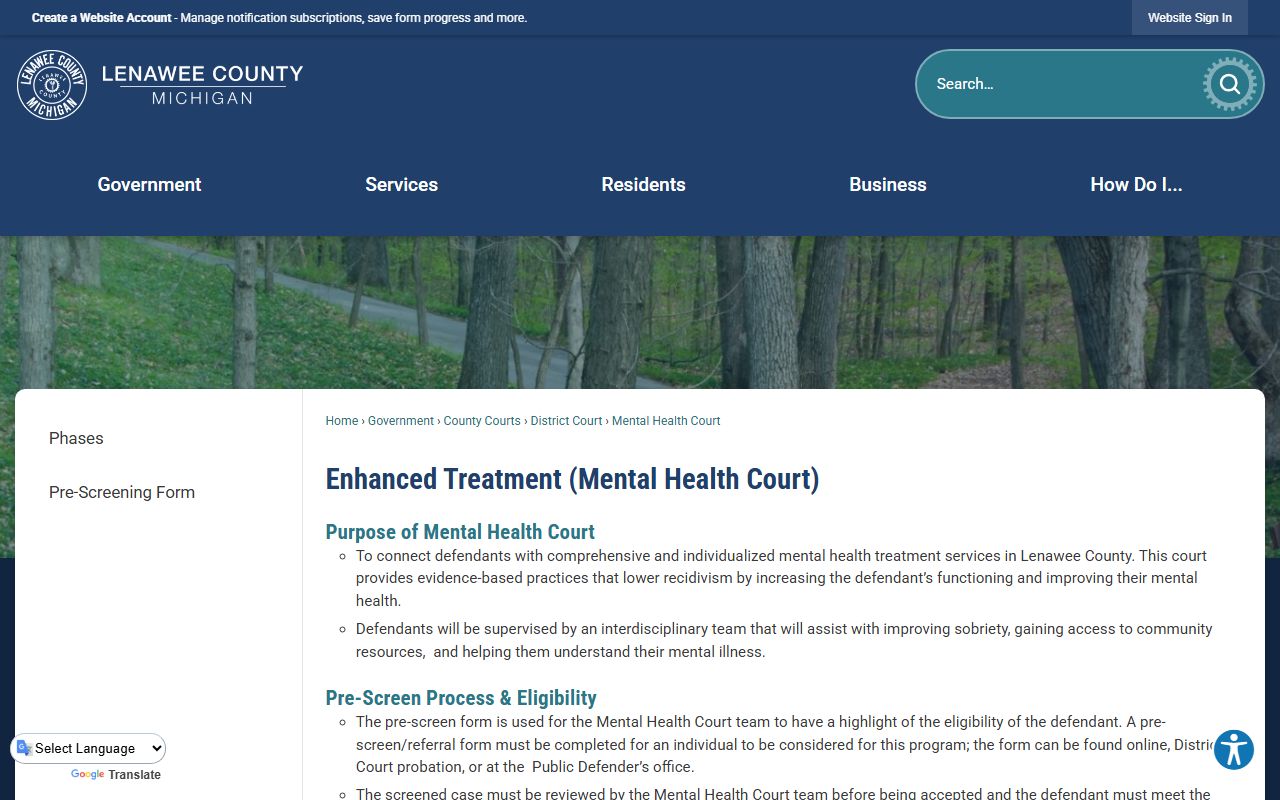
These programs do not erase the original charge, but they can change the path a charged person takes through the court.
The Charging Document Types
Charges reach the court through a formal document. The type depends on the level of the offense and the stage of the case. Each one names the person and lists the counts the state intends to prove.
| Document | Used For | Who Issues It |
|---|---|---|
| Complaint | Starts most misdemeanor and early felony cases | Prosecutor, sworn before the court |
| Information | Formal felony charge filed in Circuit Court after bindover | Prosecuting Attorney |
| Indictment | Less common state route; standard in federal cases | Grand jury |
Most Lenawee County cases begin with a complaint. Federal charges follow a separate track. Lenawee County sits in the U.S. District Court for the Eastern District of Michigan, where federal charges are filed and searched apart from county records.
The U.S. Attorney district page confirms Lenawee County is part of the Eastern District of Michigan.
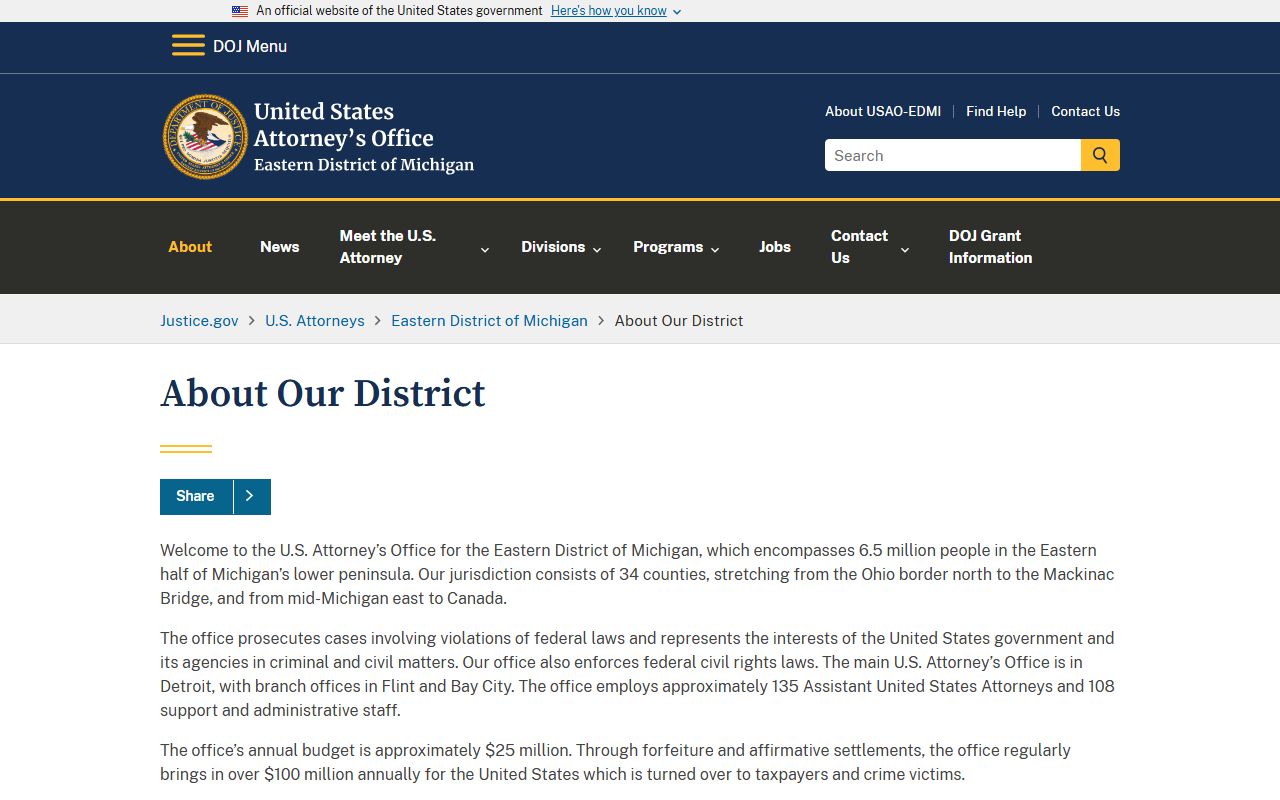
Anyone tracking a federal charge tied to the county uses the federal system, not the county clerk.
Charge vs Conviction in Lenawee County
The most common mistake in a charge search is reading a charge as a conviction. They are not the same. A charge is what the state alleges. A conviction is what a court finds true after a plea or trial.
| Charge | Conviction |
|---|---|
| An allegation filed by the prosecutor | A final finding of guilt by the court |
| Can be amended, reduced, or dropped | Entered after a plea or verdict |
| Does not prove wrongdoing | Carries the sentence and lasting record |
| Shown on the case docket as pending | Shown as a disposition and sentence |
A person can be charged and never convicted. Charges get dismissed. Juries acquit. Reading the disposition, not just the charge line, is the only reliable way to know how a case ended.
How Lenawee County Charges Change
A charge is a moving target until the case closes. The prosecutor and the court can reshape it as evidence and negotiations develop. The docket records each change, which is why the current status matters more than the first charge listed.
| Status | What It Means |
|---|---|
| Amended | The charge language or count was changed by the court. |
| Reduced | A higher charge was lowered, often by plea agreement. |
| Dismissed | The charge was dropped and will not proceed. |
| Nolle prosequi | The prosecutor chose not to pursue the charge. |
| Bound over | A felony was sent from District Court to Circuit Court. |
Because a charge can change after the first hearing, an early docket snapshot may be out of date within weeks. Always check the latest entry before relying on a charge.
Some charged people work through the Recovery Court, a voluntary probation program for certain non-violent drug and alcohol felonies. Completion can affect how a case resolves.
The county Recovery Court page lists eligibility, capacity, and program length.
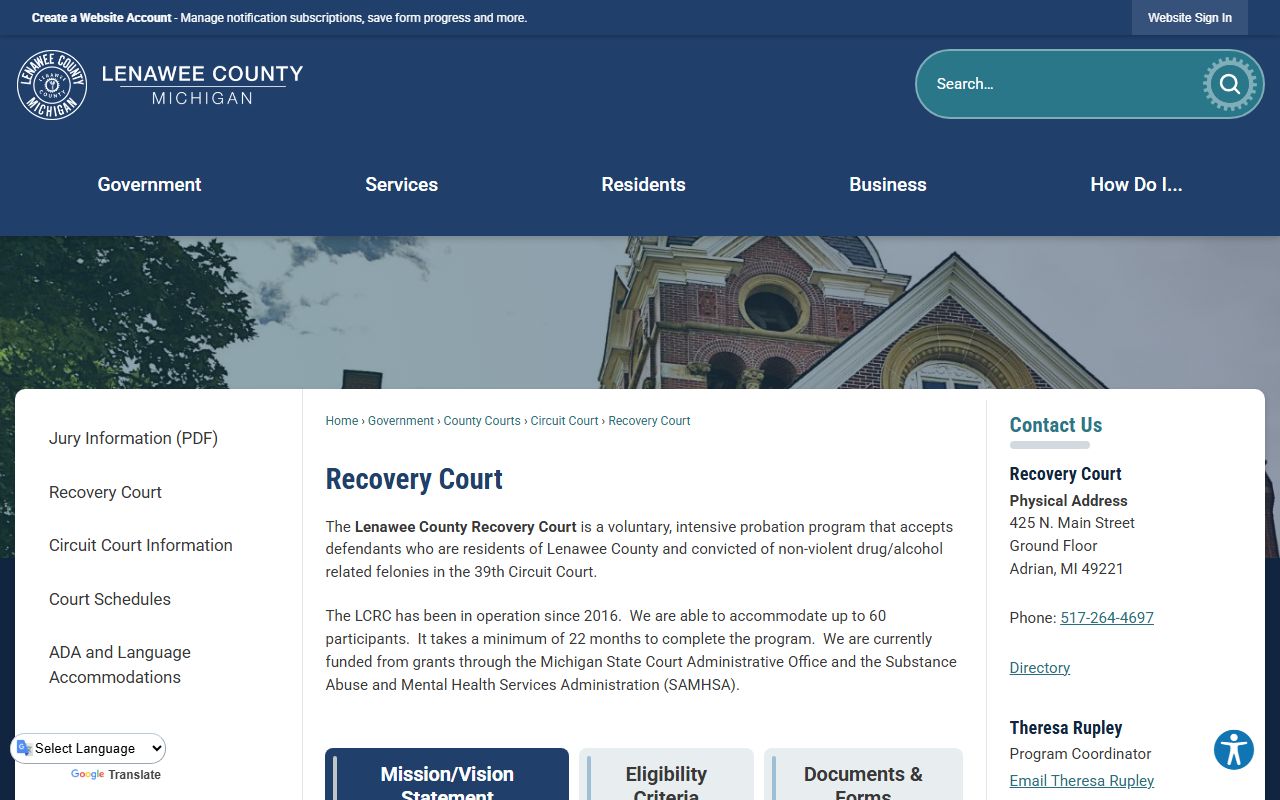
These outcomes still appear on the case docket, so the record shows both the charge and the path taken.
Who Files Charges in Lenawee County
The charging power belongs to the Prosecuting Attorney, not the police and not the court. Lenawee County Prosecuting Attorney Jacqueline V. Wyse leads that office, which is described as the county's chief law enforcement office with a duty to seek justice. The office reviews reports, files charges, and carries cases forward.
People who cannot afford a lawyer may qualify for the Office of the Public Defender. That office represents indigent people charged with misdemeanors and felonies. It will not discuss a client's case with family members because of attorney-client privilege, a point that surprises many callers.
- Prosecuting Attorney - reviews arrests and files the formal charge.
- Public Defender - defends eligible people who cannot pay for counsel.
- Arresting agency - supplies the report that starts the review.
Searching Lenawee County Charge Records
Once a charge is filed, it usually appears in Michigan's public case search. The MiCOURT system lets you look up participating Lenawee County courts by party name or case number. It shows the case index, charges, hearing events, and status, though it does not post document images.
Criminal dockets often carry a criminal tracking number, or CTN, in addition to the case number. That number links the arrest event to the court file. Federal charges use a separate portal.
| Field | Type | Required | Notes |
|---|---|---|---|
| Court | Dropdown | Yes | Pick 39th Circuit or 2A District Court. |
| Party Name | Text | Optional | Search a defendant by name. |
| Case Number | Text | Optional | Use if the file number is known. |
| Case Type | Filter | Optional | Criminal or traffic where available. |
| CTN | Text | Optional | Criminal tracking number on some dockets. |
Federal criminal charges tied to the county are filed and searched through the Eastern District's electronic filing system.
The Eastern District CM/ECF system handles federal case filings for the district.
Federal access uses a PACER account, which is separate from the free county search.
Restricted and Statewide Charge Records
Not every charge record is open. Michigan protects juvenile case records, and eligible convictions can be set aside under the state's Clean Slate law. A pending charge is public in most adult cases, but the surrounding file may hold sealed pieces.
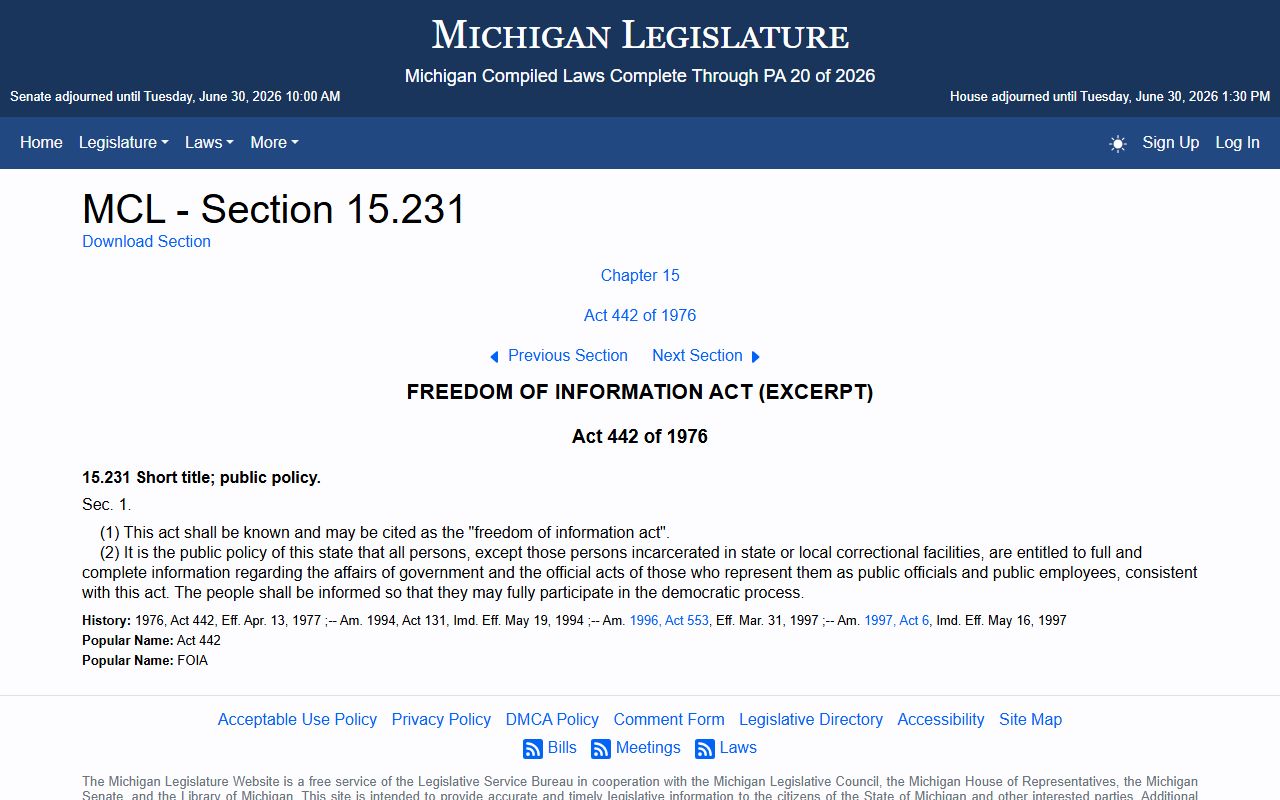
Michigan's Freedom of Information Act governs many law enforcement records, while court files follow court access rules instead. That split decides where a request should go.
Michigan's FOIA statute sets the framework for requesting public records from an agency.
For an active warrant tied to a charge, the Lenawee County warrant search page explains how to verify status with the court or sheriff.
Note: A charge that is later dismissed or set aside may stop appearing in a routine public search, even though the arrest once existed.