
The Lenawee County Probate Court
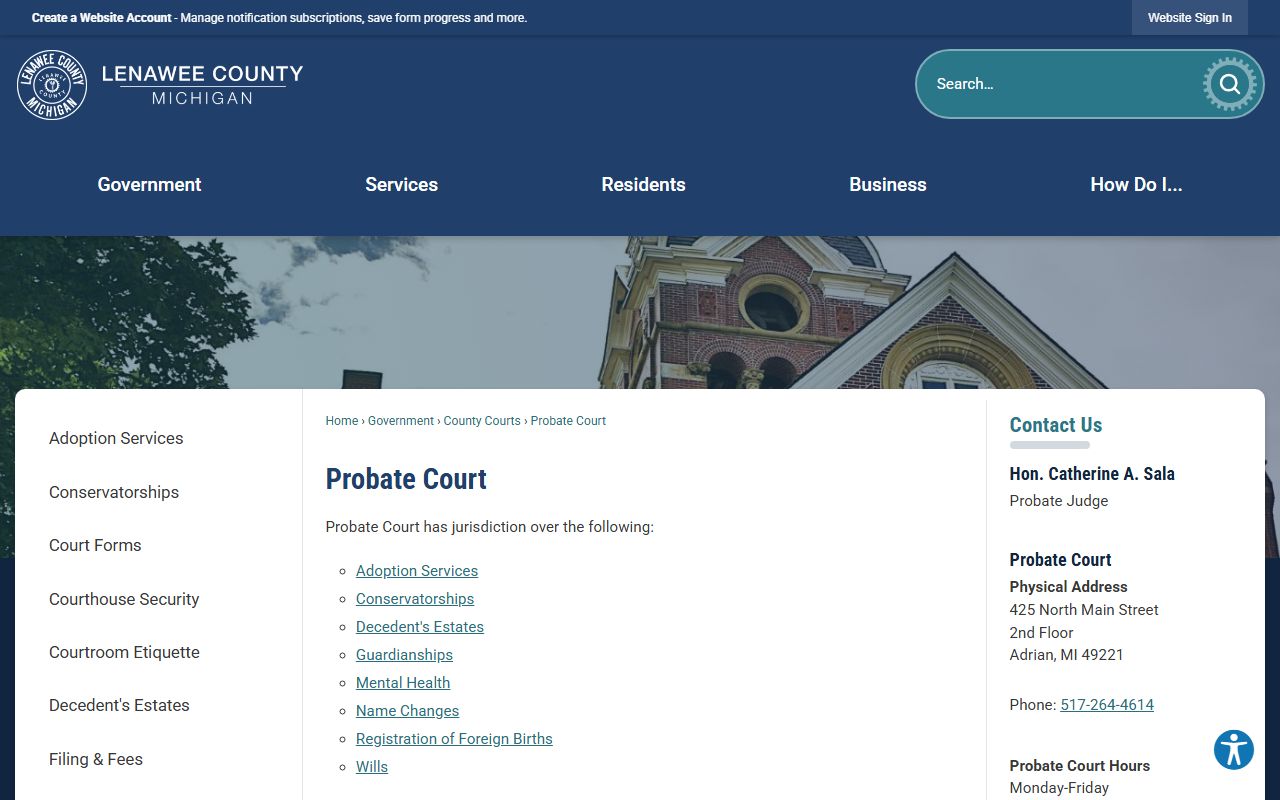
The Probate Court sits on the second floor of the Rex B. Martin Judicial Building at 425 North Main Street in Adrian. Its phone line is 517-264-4614, and its hours run Monday through Friday. The Hon. Catherine A. Sala serves as Probate Judge.
The court's own page links its many topics, from decedent estates and wills to guardianships, conservatorships, adoption services, name changes, and mental health matters. It is the single county office for these records.
The Lenawee County Probate Court page lists the judge, hours, and probate topic links.
The court also keeps genealogy and microfilm materials, which help researchers trace older family and estate records.
Lenawee County Probate Court
425 North Main Street, 2nd Floor
Adrian, MI 49221
517-264-4614
Mon-Fri 8:00am-4:30pm
What Lenawee County Probate Records Cover
Probate is broader than wills. The court handles the legal side of death, incapacity, and protection. It also manages certain personal status matters. Each type creates its own record.
- Decedent estates - opening administration, admitting wills, inventory, and distribution.
- Wills - filing, depositing, and probating a will.
- Guardianships - care for a minor or an incapacitated adult.
- Conservatorships - financial authority for a protected person.
- Adoptions and name changes - handled at the county level, with adoption files kept confidential.
- Mental health matters - treatment and commitment proceedings, which are sensitive and limited.
Estates and name changes are often public in part. Adoption, mental health, and some guardianship files are limited or closed, which the restricted-records section below covers in more detail.
How to Search Lenawee County Probate Records
Probate cases may appear in Michigan's MiCOURT Case Search when the court participates for that case type. You select the court, then search by case number or party name. For hearings, the county's Circuit, Probate, and Friend of the Court display shows the daily docket.
Online probate search gives the case index and events, not scanned documents. For a full file or a certified copy, you contact the Probate Court directly. The table below shows the search fields.
| Field | Type | Required | Notes |
|---|---|---|---|
| Court | Dropdown | Yes | Select the Lenawee Probate option if available. |
| Case Number | Text | Optional | Best for a known estate or guardianship file. |
| Party Name | Text | Optional | Decedent, ward, petitioner, or fiduciary when public. |
| Case Type | Filter | Optional | Estate, guardianship, or conservatorship where offered. |
| Date | Date range | Optional | Narrow filing or hearing dates. |
A name search can help when the case number is unknown, though closed matters may not appear at all.
When an online search falls short, the counter is the reliable route. The Probate Court takes questions by phone and in person on the second floor of the Judicial Building. Staff can point you to the right petition, explain what a file holds, and start a certified copy request. The court also links self-representation help and courtroom etiquette for people handling a matter without a lawyer.
Opening an Estate in Lenawee County
Settling an estate follows a set path through the Probate Court. The exact forms depend on the estate size and whether a will exists. The steps below outline the common process.
- Decide whether an estate proceeding is needed and whether a will exists.
- File the correct petition or application in Probate Court with the filing fee.
- The court appoints a personal representative when appropriate.
- Give required notice to interested persons and creditors.
- File an inventory and pay the inventory fee if required.
- Manage assets, claims, and taxes, then file the accounting and closing documents.
The court links probate forms, self-representation help, and courtroom etiquette guidance for people handling an estate on their own.
Note: Probate forms and deadlines are specific, so confirm the current petition and fee with the Probate Court before filing anything.
Probate Terms Explained
Probate uses words that rarely come up elsewhere. A few key terms make the records far easier to read. The list below defines the most common ones.
- Testator
- The person who made a will.
- Executor
- The person named to carry out a will, also called a personal representative.
- Intestate
- Dying without a valid will, so state law decides who inherits.
- Guardianship
- Court authority over the care of a minor or an incapacitated adult.
- Conservatorship
- Court authority over the finances of a protected person.
Guardianships and Conservatorships
Two of the busiest probate matters protect people who cannot fully protect themselves. A guardianship gives someone authority over the care of a minor or an incapacitated adult. A conservatorship gives someone authority over that person's money and property.
The Probate Court appoints and then supervises these roles. A guardian may decide where a protected person lives and how they receive care. A conservator manages accounts, bills, and assets, and must report back to the court. The court links guardianship and conservatorship information, along with the forms needed to petition for each.
Records tied to a protected adult can carry privacy limits, especially when they touch health or safety. A guardianship file may confirm that the court appointed someone while keeping sensitive personal detail out of public view.
Name Changes, Wills, and Genealogy
The Probate Court also handles legal name changes and the registration of foreign births. A name change is often public, though the court can limit access when the request involves a minor or a safety concern. Wills are filed, deposited, and probated here, which is where an estate case usually begins.
For family historians, the court keeps genealogy and microfilm materials. That collection matters in Lenawee County for a specific reason. The original county courthouse burned in 1852 and destroyed years of early court, birth, and marriage records, so surviving materials are especially valuable to researchers tracing older family lines.
- Name changes - petitioned through Probate Court, with limits for minors and safety cases.
- Registration of foreign birth - recorded for qualifying residents.
- Wills - filed, deposited, and admitted to probate.
- Genealogy and microfilm - older records for family research.
Probate Filing and Inventory Fees
Probate carries filing costs, and estates also owe an inventory fee based on the value of the estate. The county Probate Court links its filing and fees and inventory fees pages. Specific dollar amounts are set by the court and by state schedules, so confirm the current figure before you file.
| Item | Detail |
|---|---|
| Petition filing fee | Set by the court; confirm the current amount. |
| Inventory fee | Based on the value of the estate. |
| Certified copy | Requested from the Probate Court; confirm the fee. |
| Genealogy or microfilm | Available through the court for research. |
For certified vital records tied to a family estate, such as a death or marriage certificate, the Lenawee County marriage and divorce records page covers the clerk's copy process.
Restricted Probate Records
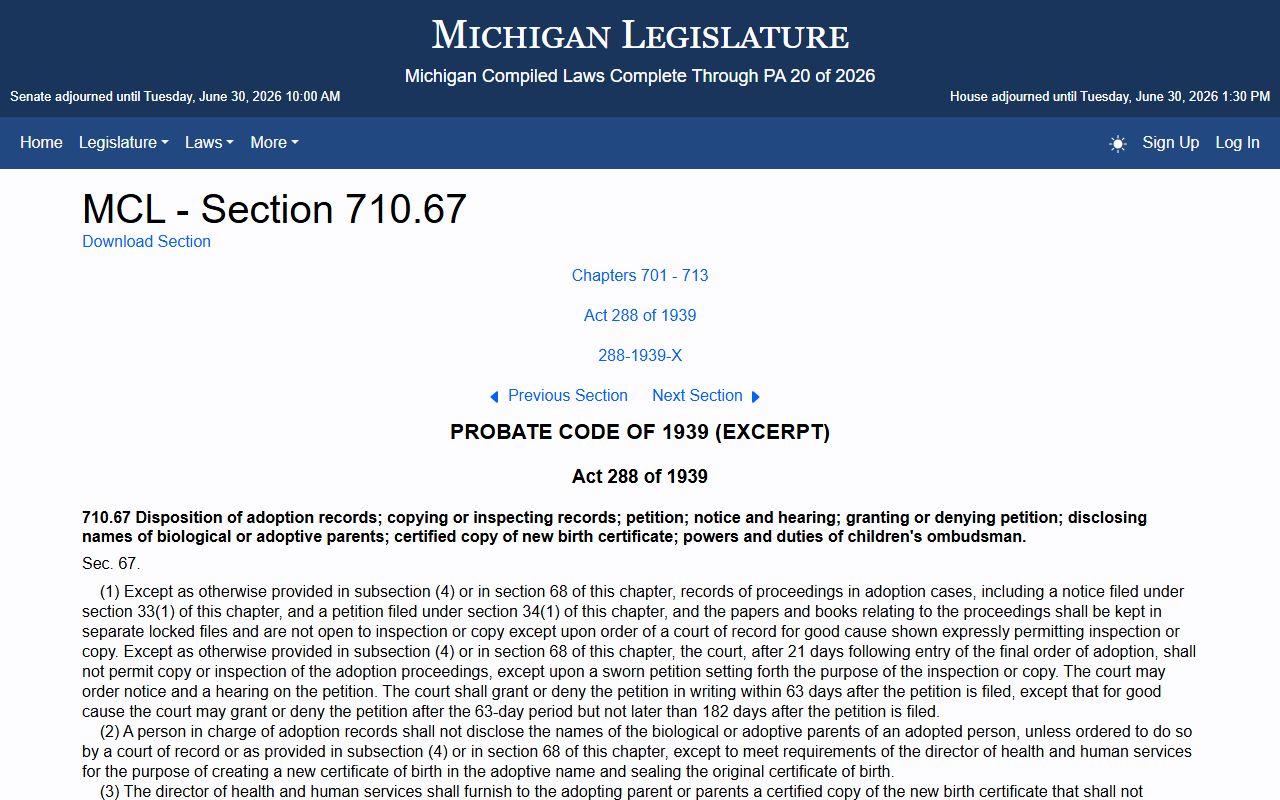
Some of the most sensitive court files are in probate. Adoption records are confidential under Michigan law, and identifying information is restricted unless statutory conditions or a court order allow access.
The state adoption statute sets out those limits. It is why an adoption search cannot promise open access.
Michigan's adoption records statute sets the confidentiality and access rules for adoption files.
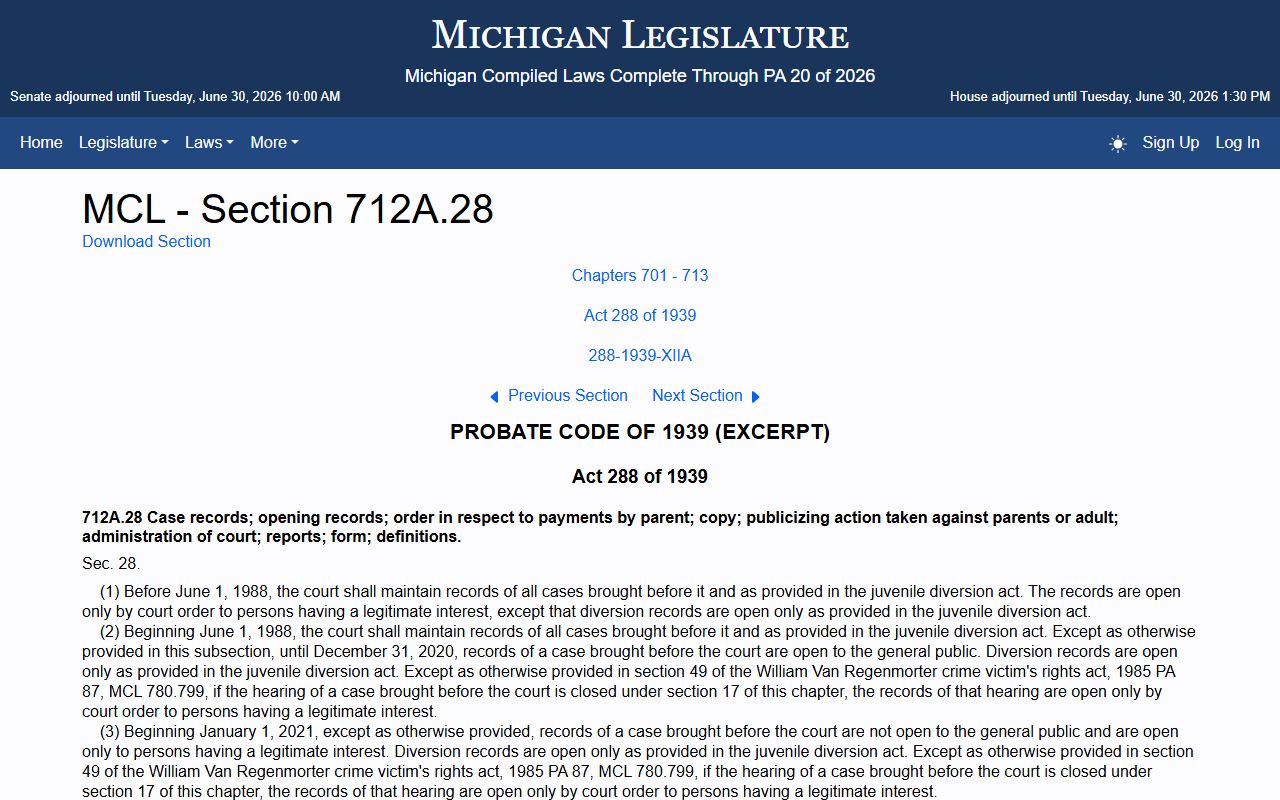
Juvenile matters connected to the family court are also protected. Since 2021, most juvenile case records are not open to the general public without a court order or a legitimate interest.
Michigan's juvenile records statute limits public access to juvenile case files.
Mental health proceedings are likewise limited. The county even marks its progress in this area, celebrating a successful Adoption Day at the Judicial Building in late 2025.
Probate Estates vs Federal Bankruptcy
People sometimes confuse probate with bankruptcy, since both deal with assets and debts. They are not the same, and they are not in the same court. Probate is a county matter. Bankruptcy is federal.
Lenawee County falls under the U.S. Bankruptcy Court for the Eastern District of Michigan. Those cases are filed and searched through the federal electronic system, not the county Probate Court.
The Eastern District bankruptcy filing system handles federal bankruptcy cases for the district.
For county filings and certified copies beyond probate, the Lenawee County Clerk page explains the clerk's request process.