
Criminal Court Records in Lenawee County
A criminal court record is the case file a court opens once formal charges are filed. It is not the same as an arrest log or a booking sheet. The record grows as the case moves, one docket entry at a time. In Lenawee County, the County Clerk acting as Circuit Court Clerk keeps the felony case files, while the 2A District Court keeps its own criminal records. Every filing, order, and hearing gets logged. The result is a running history of the case from the first charge to the last order. A single case file can hold the complaint, bond papers, plea forms, motions, the judgment, and the sentence.
The 39th Circuit Court is the county's general trial court for serious crimes. Its official Circuit Court page states it holds original jurisdiction over all felony criminal cases filed in the county, along with civil claims over $25,000 and divorce.
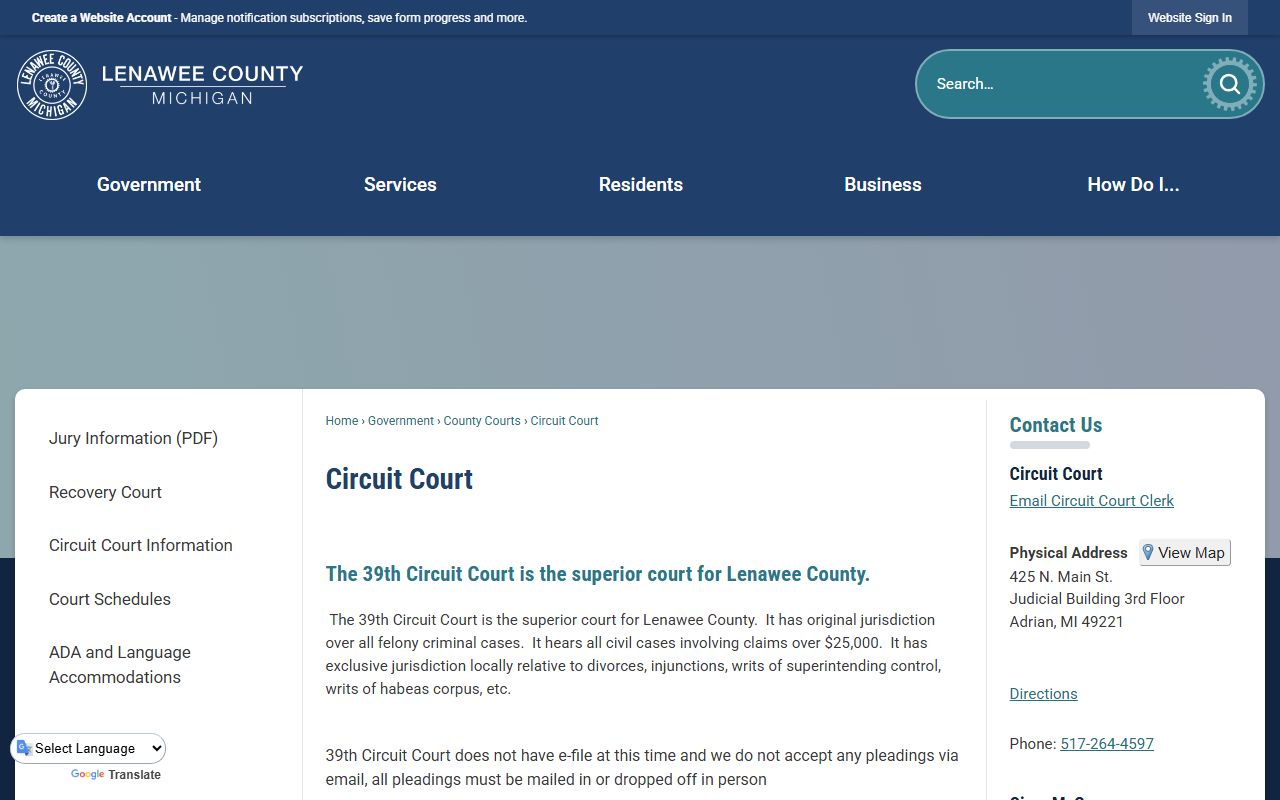
That felony record set covers the charges, arraignment, plea, trial dates, disposition, and sentence for each defendant. District court handles the rest and the early steps. Misdemeanors, from petty theft to drunk driving, usually stay in the 2A District Court. Felonies also begin there for arraignment and the probable cause stage before any bindover. Both courts feed the public docket. Full document images, though, are not posted online, so the file itself lives at the courthouse. For a wider view of every record type the county keeps, the Lenawee County court records overview maps the whole system.
Courts Behind Lenawee County Criminal Records
Two trial courts share the criminal caseload in the county. The split turns on how serious the offense is. Misdemeanors carry shorter jail limits and stay in district court through sentencing. Felonies carry longer possible prison terms and end up in circuit court. The path a felony takes runs through both courts before it closes.
The 2A District Court is a limited-jurisdiction court. It handles traffic crimes, civil infractions, and misdemeanors from first appearance to final order. It also opens every felony case for the early stages. A felony that clears the probable cause test is bound over, meaning the case transfers to the 39th Circuit Court for trial and sentencing. Each court that touches a case leaves its mark in the record.
- District court: misdemeanor charges, arraignment, plea, and sentence.
- District court: felony arraignment, probable cause conference, and preliminary exam.
- Circuit court: felony trial, plea, disposition, and sentencing after bindover.
- Circuit court: probation review, restitution, and criminal appeals from district court.
Note: a felony case can show entries in both the district court and circuit court files, so a full history may mean checking records at each level.
Stages of a Criminal Case in Lenawee County
A criminal case moves through set steps, and each step leaves a trace in the record. Reading the docket in order shows how a charge became a plea or a verdict, and then a sentence. The flow below is the common path for a felony that begins in district court and finishes in circuit court.
Case flow: Charges Filed › Arraignment › Pretrial / Preliminary Exam › Plea or Trial › Disposition › Sentencing
Charges are filed when the prosecutor authorizes a complaint after an arrest or a police request. At arraignment, the court reads the charges, advises the defendant of rights, and sets bond. Pretrial dates and, for felonies, a preliminary exam test the evidence and shape the case. A case then ends in a plea or a trial. The disposition records the outcome, and sentencing sets the punishment. Some cases add probation reviews, motions, or an appeal after that point.
The public docket shows most of these events by date. A row may name the hearing type, the courtroom, the judge, and the attorneys. Document images stay off the internet, so the certified plea form or judgment is pulled from the clerk when a paper copy is needed.
How to Search Lenawee County Criminal Court Records
The main starting point is the statewide MiCOURT Case Search. It reaches participating Michigan trial courts and shows the case index, parties, events, and hearing data. Coverage varies by court and case type, so the right court has to be picked first. For felony matters, choose the 39th Circuit Court. For misdemeanor and early felony steps, choose the 2A District Court.
- Open the MiCOURT Case Search portal at the Michigan Courts site and pick the correct Lenawee County court.
- Search by defendant name or by case number. A case number is less ambiguous and avoids common-name mix-ups.
- Narrow the search by court, case type, and date range when the portal allows it.
- Open the case to read the register of actions, the docket entries, and the disposition.
- Request a certified copy from the clerk when a paper document is needed for a legal purpose.
Online results stop at the index and docket. Michigan rules keep document images off the public internet, so plea forms, judgments, and orders are copied at the counter. The 39th Circuit Court has no e-file and does not accept pleadings by email, so filings and copy requests go by mail or in person. For daily hearing lists, the county court schedule pages link the MiCOURT court display for both trial courts.
What a Lenawee County Criminal Court Record Shows
A criminal case file is built from many fields. Each one answers a plain question about the case: who, what, when, and how it ended. The table below breaks down the fields a public docket commonly shows in the county's trial courts.
| Field | What It Shows |
|---|---|
| Case Number | The court's file number, often ending in a two-letter case-type code that flags the kind of case. |
| Court | 39th Circuit Court, 2A District Court, or the family division, showing which level holds the file. |
| Defendant | The person charged, listed against the State of Michigan or the People as the charging party. |
| Charges | The counts filed, with statute references and severity levels such as misdemeanor or felony. |
| Attorneys | The prosecutor and the defense counsel of record, whether retained or an assigned public defender. |
| Plea | How the defendant answered the charges: guilty, not guilty, or no contest. |
| Docket | The register of actions, listing arraignment, motions, hearings, and orders by date. |
| Disposition | The outcome, such as a guilty plea, dismissal, or verdict that closes the charge. |
| Sentence | The punishment imposed, including jail, probation, fines, costs, and restitution. |
Some fields stay hidden. Social Security numbers, financial account numbers, minor identifiers, and sealed material are redacted or withheld under Michigan privacy rules. The public sees the case skeleton, not every private detail.
Reading Dispositions and Sentences
The disposition is the line that tells the reader how a charge ended. It is the single most important field for judging the weight of a record. A dismissal and a conviction sit in the same file, yet they mean very different things. Reading the terms carefully avoids drawing the wrong conclusion from an open or closed case.
A sentence follows a conviction. It may combine several conditions, so a record can show jail time along with probation, fines, and restitution. The dollar figures and the supervision terms all live in the sentencing entries.
- Guilty plea
- The defendant admits the charge, and the court enters a conviction without a trial.
- No contest
- The defendant does not fight the charge, and the court treats it as a conviction for the case.
- Dismissed
- The charge is dropped, with prejudice when it cannot be refiled or without prejudice when it may return.
- Disposition
- The case outcome, whether a plea, verdict, dismissal, or other closure of the charge.
- Probation
- A supervised sentence that lets a defendant stay in the community under set conditions.
- Restitution
- Money the court orders paid to make a victim whole for a proven loss.
Charges vs. Convictions
Being charged is not the same as being convicted. A criminal court record can list charges that were later dropped, dismissed, reduced, or that ended in an acquittal. A charge is only an accusation. A conviction is proof the case was decided against the defendant by plea or verdict.
| Charge | Conviction | |
|---|---|---|
| Stage | Accusation filed | Verdict or plea entered |
| Burden of Proof | Probable cause | Beyond a reasonable doubt |
| Can Change | Yes, by amendment or dismissal | Final unless appealed or set aside |
| Public Record | Yes | Yes |
The charging side of the record deserves its own look, since counts can be amended, reduced, or dropped as a case moves. A closer view of complaints, charge codes, and charge status sits in the county's arrest records and court charges. The criminal case file, by contrast, carries the story all the way to the final outcome.
Prosecutor and Public Defender Roles in Lenawee County
Two offices shape most criminal case files. The prosecutor decides what to charge and how to pursue it. The defense side answers those charges and protects the defendant's rights. Both leave names on the docket, and their filings drive the record forward.
The Lenawee County Prosecuting Attorney is Jacqueline V. Wyse. Her official Prosecuting Attorney page describes the office as the county's chief law enforcement office, with a special duty to seek justice rather than merely convict.
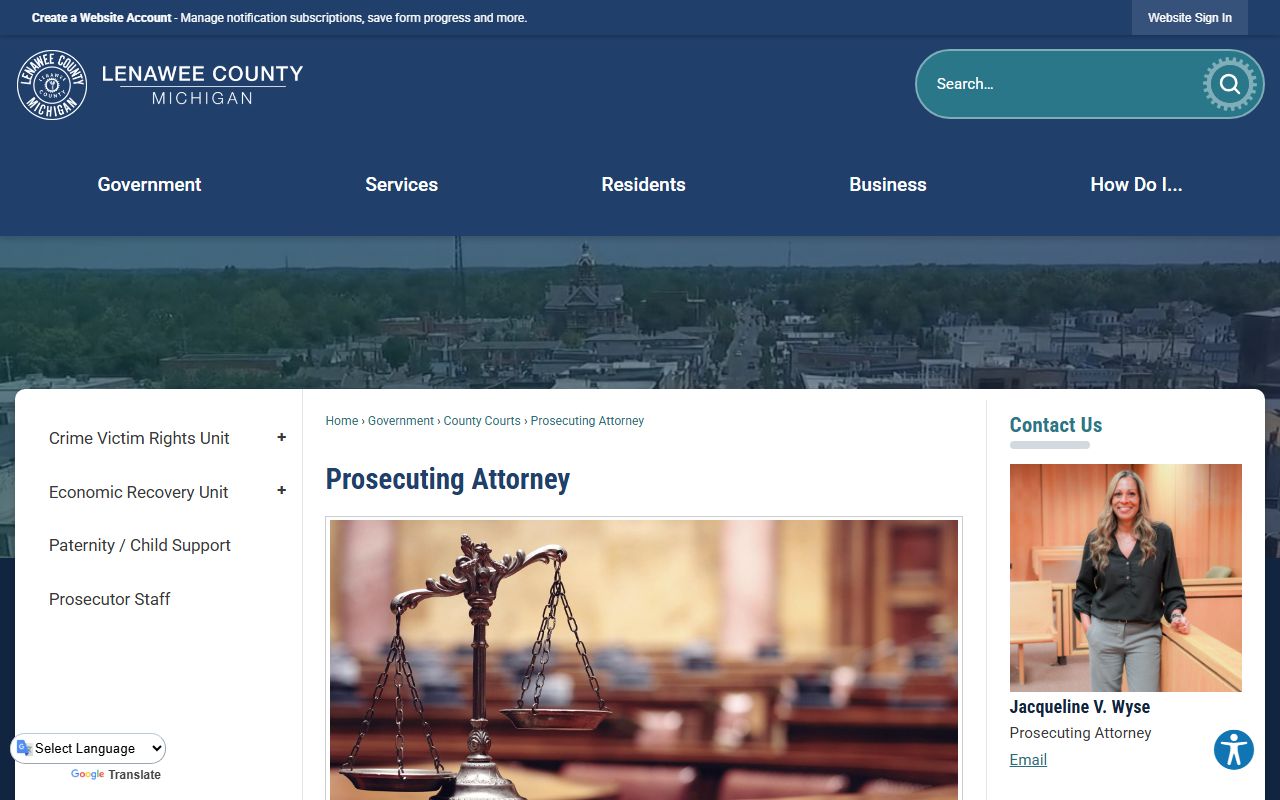
The prosecutor's charging choice creates the formal charge record after an arrest, and later filings shape the plea or trial. On the other side, the public defender represents people who cannot afford a lawyer. The office covers both misdemeanors and felonies. Its official Public Defender page lists Chief Public Defender Christine Beecher and explains that attorneys are assigned by the court.
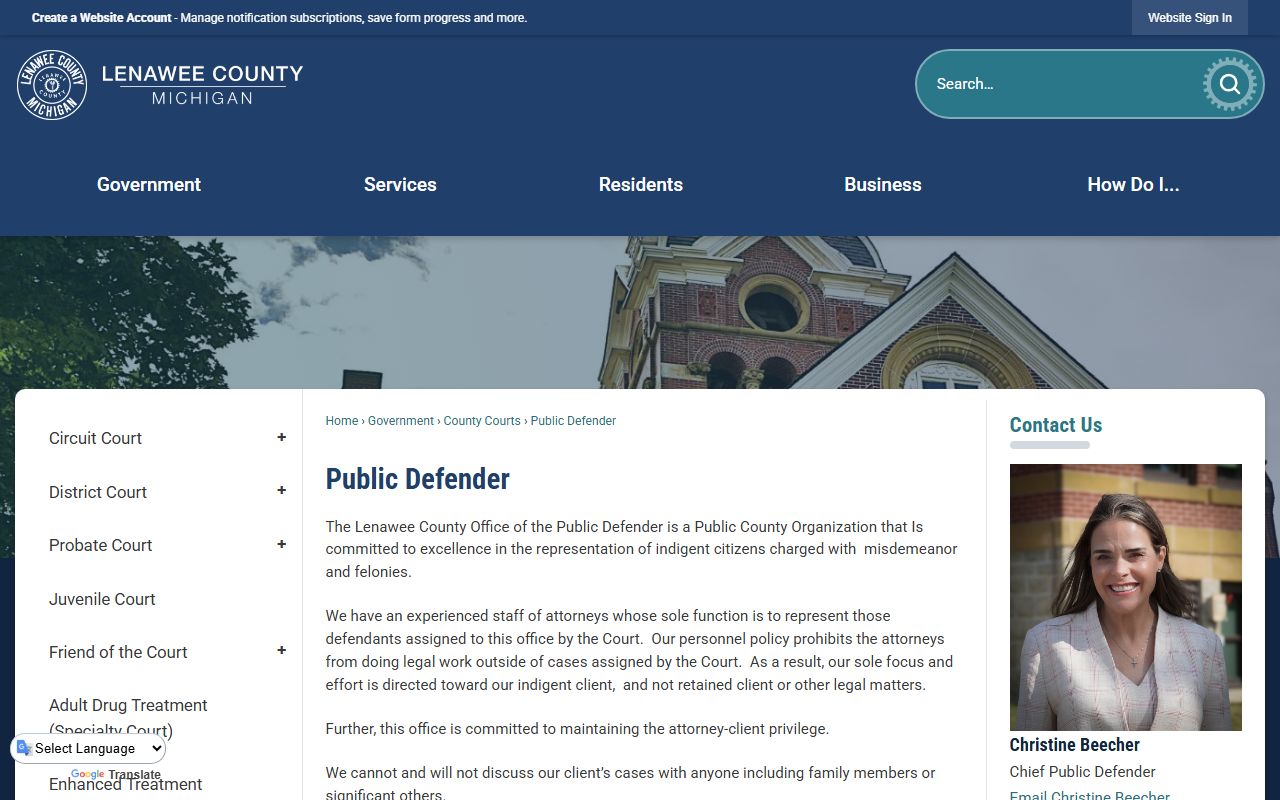
When a public defender enters a case, the appearance shows in the district or circuit court record. Defense counsel names appear on MiCOURT rows and on the daily court display next to the case. The office will not discuss a client's case with family members because of attorney-client privilege.
Public Access to Lenawee County Criminal Records
Criminal case files are public in Michigan, but the way you reach them follows court rules, not the general open-records law. Court records go through the court clerk under the rules of court. Sheriff, jail, incident, and administrative records use the state Freedom of Information Act instead. That split matters when deciding where to send a request.
Online access shows the index and docket. Certified documents come from the clerk counter. The statutes and rules below set the frame for how criminal records may be viewed and copied.
Key Statutes:
Michigan Compiled Laws § 15.231 - the state Freedom of Information Act lets people request public records from public bodies, but it does not govern court case files.
Michigan Compiled Laws § 15.232 - FOIA definitions exclude the judiciary and the county clerk when acting as circuit court clerk, so court records go through court rules.
Michigan Court Rule 8.119(H) - court document images may not be posted for public access on the internet, so online search returns the index and docket only.
Sealed vs. Set Aside Records
Michigan uses the phrase "set aside" for what many people call expungement. A set-aside removes an eligible conviction from the public criminal record after the legal process finishes. A sealed record is hidden from public view but still exists. The two are close in effect, yet the routes and the reach differ.
| Sealed | Set Aside | |
|---|---|---|
| Visibility | Hidden from public view | Removed from the public criminal record |
| Law Enforcement | Limited access remains | Statutory access remains for some checks |
| Eligibility | By statute or court order | Eligible convictions under Michigan set-aside law |
The set-aside process rests on state law. Its official basis appears in the Michigan conviction set-aside statute, which lets eligible convictions be set aside so they no longer show in the usual public record.
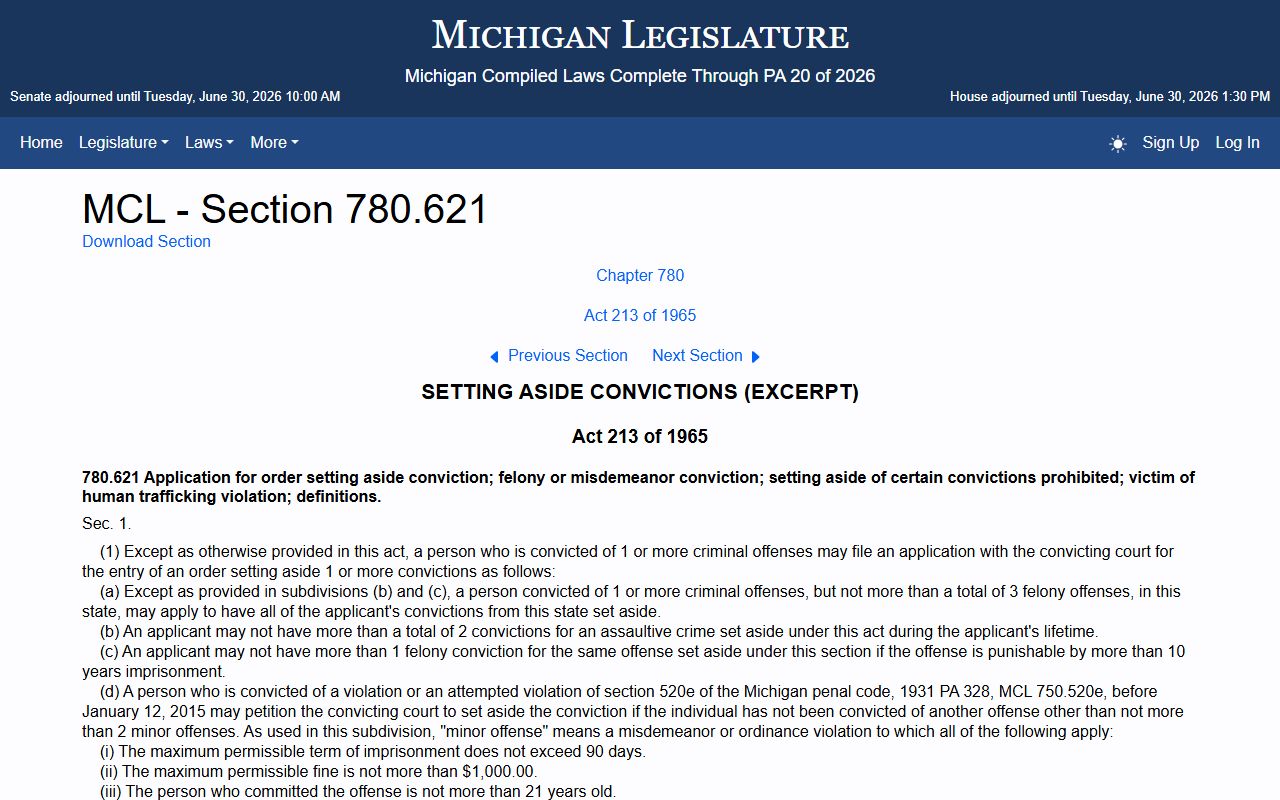
Michigan also runs an automatic program. The state's Clean Slate page explains that automatic set-asides took effect in April 2023, with limits such as no more than two felonies and four qualifying misdemeanors.
Some offenses are excluded, and some still require an application to the sentencing court. A set-aside does not promise complete erasure, since certain licensing and law enforcement checks keep statutory access. A Lenawee County user should confirm eligibility with the sentencing court and the Clean Slate rules before filing.
Background Check Considerations
A casual case lookup is not the same as a regulated background check. Employers, landlords, and lenders that screen applicants must follow federal rules for consumer reports. A quick MiCOURT search is fine for personal knowledge, but it does not meet the standards for a hiring or tenancy decision. Formal checks run through licensed agencies and the state criminal history system.
Important: This website is not a consumer reporting agency under the Fair Credit Reporting Act, and its records may not be used to decide credit, employment, housing, or insurance.
Restricted Lenawee County Criminal Records
Not every criminal matter is open to the public. Some files are closed by statute, and others are limited while a case is active. The court withholds material that could harm a minor, a victim, or an ongoing matter. Reading a public docket, a searcher may find that some cases are simply not shown.
Juvenile cases carry the strongest limits. Under the Michigan juvenile records statute, many juvenile case records are not open to the general public and reach only authorized persons or a court order. Sealed and set-aside convictions drop out of the public record as well.
- Juvenile delinquency and child protective files, closed by statute in most cases.
- Sealed or set-aside convictions no longer shown in the usual public record.
- Adoption and mental health matters handled with strict confidentiality.
- Redacted identifiers such as Social Security and financial account numbers.
Note: an active investigation or a warrant that has not been served may keep parts of a case out of public view until the court unseals it.
Federal Criminal Cases from Lenawee County
Not all criminal cases tied to the county run through state court. Federal crimes charged against county residents move through the U.S. District Court for the Eastern District of Michigan. These files sit apart from the 39th Circuit Court and the 2A District Court, and they use a separate records system.
The federal prosecutor for the region is the U.S. Attorney for the Eastern District of Michigan. That office's official U.S. Attorney page describes it as the chief federal law enforcement office for the district, which includes Lenawee County.
Federal criminal case records are searched through PACER and the district's electronic filing system, not through MiCOURT. A defendant with an active state matter may also face a bench warrant if a court date is missed, and those show in the county's separate warrant records rather than the case file itself.